
Purity Hrisca CSci, EMEAI Supplier Quality Assurance Manager
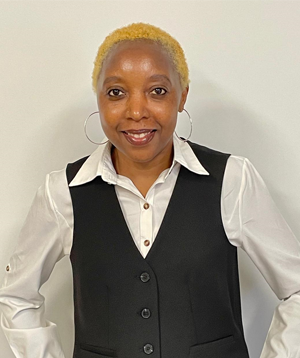
Purity Hrisca CSci
Registration level:
Chartered Scientist (CSci)
Job title: EMEAI Supplier Quality Assurance Manager
Professional body:
Institute of Food Science & Technology (IFST)
Social profiles:
LinkedIn
Take our quiz: What type of scientist are you?
"The application process was an opportunity to reflect on my contribution to the industry and to the businesses I have worked for."
Why did you decide to apply for Chartered Scientist (CSci)?
I applied for Chartered Scientist status to demonstrate my commitment to maintaining high professional standards. The second reason is to contribute to the advancement of science, and to foster continuous personal development. Achieving and maintaining this status reflects my dedication to lifelong learning and applying scientific expertise to solve real-world challenges.
How has Chartered Scientist status made an impact on your work or career?
The Chartered Scientist status has enhanced my professional credibility in the fields of food science, food safety, and quality management. It demonstrates my commitment to high standards and continuous development, fostering confidence with peers and stakeholders. This status also reinforces my expertise, allowing me to contribute more effectively to industry discussions and advancements through professional work and my blog.
What did you learn through completing the application process?
I applied for my Chartered Scientist status 3 or 4 years ago. The application process was an opportunity to reflect on my contribution to the industry and to the businesses I have worked for. The competency report is quite comprehensive; by completing the report, I was able to relate my contribution in the work place to the scientific discipline. I learnt that no matter the field of science, the competencies for Chartered Scientist status are similar, whether a Biochemist, Food Scientist, Materials Scientist, etc.
What do you value most from being a member of your professional body?
I value professional development offered via my professional body. IFST has a membership platform where I log CPD for my Chartered Scientist status.
Another value of IFST membership is networking opportunities and learning from peers who are also members. As a member of the IFST and also a Chartered Scientist, I have to adhere to a code of ethics, maintain high standards in my work and be an ambassador of my discipline.
What would you say to any other scientist like yourself who is thinking about becoming a Chartered Scientist?
I would tell fellow scientists that becoming a Chartered Scientist is an excellent step for demonstrating your commitment to professional excellence and continuous development. It not only enhances your credibility within your field but also opens doors to networking opportunities. It shows that you are dedicated to maintaining high standards and staying at the forefront of your profession, which is essential for long-term success. If you are passionate about your work and eager to grow, achieving Chartered Scientist status is a powerful way to validate your expertise and commitment. If you are in UK, as a Chartered Scientist, you fall into the category of recognised professions for passport application countersignatories.
Become professionally registered
Inspired? Find out how to apply to for professional registration.