Amy Calder CSci, Head of Mortuary, Bereavement Services and Medical Examiners Services
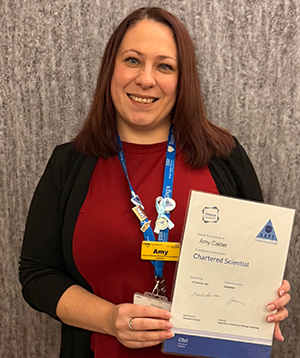
Amy Calder
Registration level:
Chartered Scientist (CSci)
Job title: Head of Mortuary, Bereavement Services and Medical Examiners Services
Professional body:
Association of Anatomical Pathology Technology (AAPT)
"It has validated my role and demonstrated that I possess extensive experience and knowledge in my field."
Can you tell us a bit about your work and what you do?
As Head of Services for Mortuary, Bereavement, and Medical Examiners at King’s College Hospital, I lead and oversee operations across two hospital sites, ensuring the delivery of high-quality, compassionate care for both hospital and community deceased patients. As the Designated Individual for the Post-Mortem sector, I am accountable for maintaining compliance with Human Tissue Authority (HTA) standards and promoting best practice across all aspects of the service.
I am passionate about education and regularly engage in teaching and supporting new staff and visitors to the mortuary, helping to enhance understanding of mortuary practices, bereavement care, and the vital work that takes place after death.
Why did you decide to apply for Registered Science Technician/Registered Scientist/Chartered Scientist/Chartered Science Teacher?
I have worked in a mortuary setting since 2006 and have witnessed many changes and improvements in the profession over the years. Recently, I joined the APPT Council to actively contribute to these ongoing developments. As our profession continues to evolve, registration has become an increasingly important aspect of maintaining high standards and professional recognition. In my role as both a council member and Head of Service for two major hospitals, I believe it is essential to lead by example and support these changes, ensuring our teams continue to uphold the highest levels of professionalism and care.
What impact has achieving professional registration had on your work or career?
Having professional registration has had a positive impact on my career. It has validated my role and demonstrated that I possess extensive experience and knowledge in my field. Colleagues have noticed this achievement and often ask questions about it, which provides me with the opportunity to discuss professional registration, my role, and the wider profession.
What did you learn through completing the application process?
The application process gave me the opportunity to reflect deeply on my career journey — from my days as a trainee to where I am now. Although it was quite a long process, I genuinely enjoyed revisiting my experiences and accomplishments along the way.
What do you value most from being a member of your professional body?
Being a member of a professional body is extremely important and valuable.
The field of Anatomical Pathology Technology is relatively small, and belonging to a professional network provides vital opportunities to share ideas, exchange knowledge, and discuss policies and procedures.
The AAPT continues to work towards ensuring consistent standards across all mortuaries, and having a strong professional body is a crucial part of achieving this goal.
What advice would you give to any other scientist like yourself aspiring to achieve professional registration?
Any APT with several years of experience will be eligible to apply for registration. Even without a Master’s degree, applicants can submit a supplementary statement to demonstrate how they meet the required criteria. I suggest that anyone considering applying for registration take the time to review their career thoroughly and list all relevant achievements.
Become professionally registered
Inspired? Find out how to apply to for professional registration.